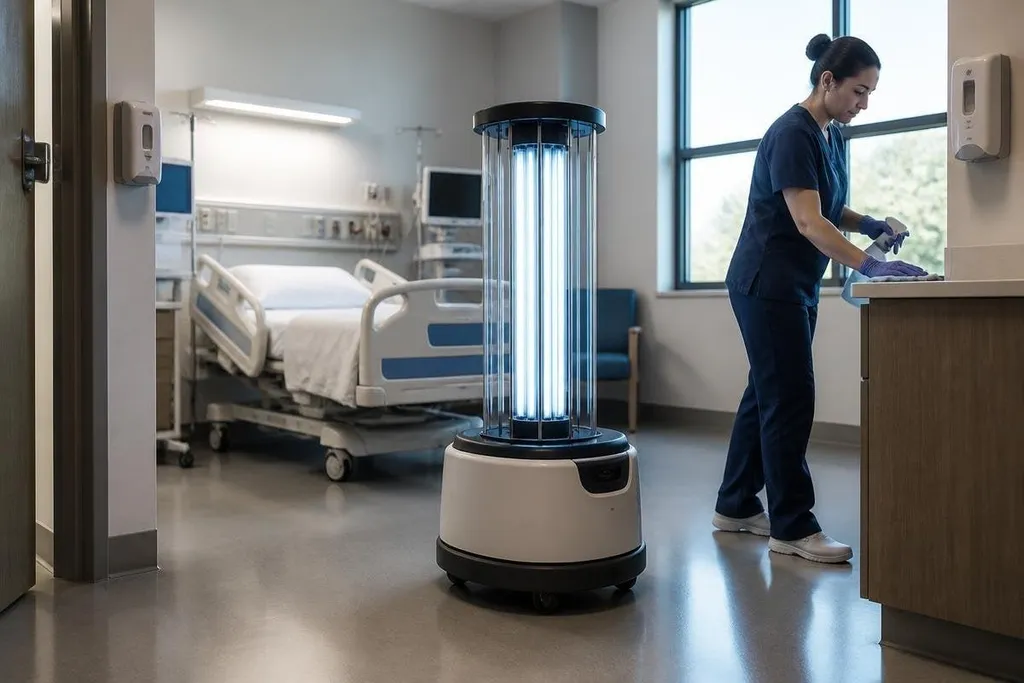
A hospital disinfection robot can treat a room after staff finish the physical cleaning. It can add ultraviolet-C light or a chemical mist, then record where and when the cycle ran.
Quick read:
- UV-C systems need a clear path to the surfaces they treat.
- Chemical systems need room sealing, evacuation, and air checks.
- The robot cannot remove dirt, blood, or other material before disinfection.
What the robot actually does
Most systems fit into one of two groups. UV-C robots move into an empty room and use ultraviolet light to damage the genetic material of microbes on exposed surfaces. The light works only where it reaches, so beds, carts, door handles, and equipment can create shaded areas.
Chemical systems release a disinfectant into a closed space. Depending on the system, that may involve hydrogen peroxide vapor or another approved agent. Staff must clear the room, close doors, follow exposure rules, and wait for the air to return to a safe level.
That difference changes the work around each machine. A UV-C unit needs careful placement and enough time at each position. A chemical unit needs stronger control of the room itself. Neither system replaces wiping a surface first.
Why hospitals use them
Manual cleaning remains the first step because dirt and residue can block light or limit contact with a disinfectant. The robot handles the next part: applying a repeatable treatment after the room is ready.
This can help a hospital keep a record of the process. A useful system logs the room, cycle time, treatment method, and any interrupted run. Those records give infection-control staff something to check instead of relying on a verbal handoff.
The machine also gives cleaning teams a fixed procedure for rooms that need extra treatment. That may include an isolation room after discharge, an operating room between cases, or a room used by a patient with a known infection.
The exact workflow depends on the hospital's rules and the disinfectant approval.
A buyer can use robotics coverage for buyers to compare a robot’s disinfectant method with the hospital’s approval record and cleaning log.
Where the limits show up
A disinfection robot cannot decide that a room is ready unless staff define and check that condition. It also cannot see every hidden surface unless the team moves objects or places the robot correctly.
Room layout creates another problem. A robot may reach the center of a room but miss the side of a bed, the underside of a table, or a surface behind a curtain. A site survey should check those blind areas before purchase.
Safety adds more steps. UV-C light can injure skin and eyes, and chemical agents can harm people who enter too soon. Door sensors, warning lights, remote controls, and room checks need to work every time. A hospital should test those controls during normal cleaning, shift changes, and equipment faults.
The price also extends beyond the robot. Buyers need staff training, service work, replacement lamps or chemical supplies, software support, and a plan for failed cycles. A low purchase price can lose its value if the machine sits unused because the workflow takes too long.
A buying checklist
Before a hospital orders a disinfection robot, the infection-control and facilities teams should check:
- Treatment method: Does the system use UV-C, a chemical agent, or another approved process?
- Room fit: Can staff place it near the surfaces that need treatment?
- Safety controls: What stops the cycle if a door opens or a person enters?
- Cycle record: Can the system store the room, start time, finish time, and failed runs?
- Staff work: Who cleans first, starts the robot, checks the room, and signs off?
- Service plan: What parts, training, and response time does the supplier include?
The right purchase is the one that fits the cleaning route already used by the hospital. I'd skip any system sold as a replacement for surface cleaning, staff checks, or infection-control rules.
Hospital disinfection robots can add a recorded treatment step after manual cleaning. Their value will be decided by completed cycles, safe room release, and clean records, not by the machine moving through a corridor.